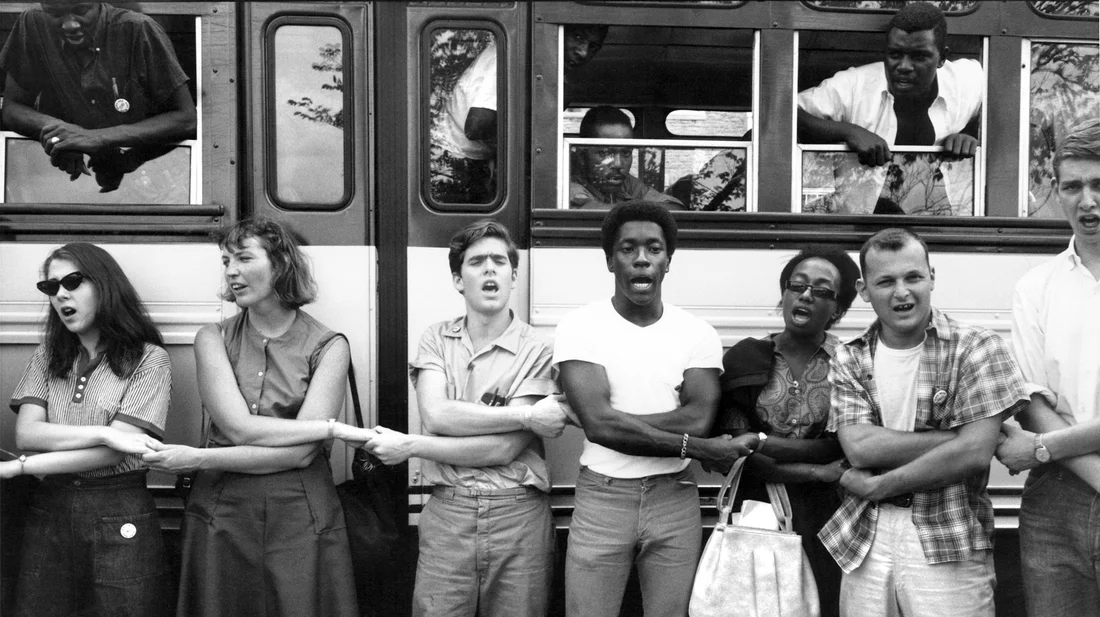

Freedom Summer was a major civil rights campaign in the United States during the summer of 1964, organized primarily to register African American voters in Mississippi, a state with a long history of disenfranchising Black citizens through discriminatory laws, intimidation, and violence. It was a pivotal event in the Civil Rights Movement, drawing national attention to the fight for racial equality in the South.
Key Features of Freedom Summer:
- Goals:
- Voter Registration: The primary goal was to increase voter registration among African Americans in Mississippi, where fewer than 7% were registered to vote despite being a majority in many areas.
- Education: Volunteers established Freedom Schools to provide education and raise political awareness among Black residents, focusing on literacy, history, and civic participation.
- Political Mobilization: The campaign supported the creation of the Mississippi Freedom Democratic Party (MFDP), an alternative to the state’s all-white Democratic Party, to challenge segregation in politics.
- Organizers:
- Freedom Summer was coordinated by civil rights organizations, including:
- Congress of Racial Equality (CORE)
- Student Nonviolent Coordinating Committee (SNCC)
- National Association for the Advancement of Colored People (NAACP)
- Southern Christian Leadership Conference (SCLC)
- The campaign brought together Black activists and thousands of predominantly white college students from the North to work together, symbolizing a broad coalition for civil rights.
- Freedom Summer was coordinated by civil rights organizations, including:
- Challenges and Risks:
- Mississippi was notoriously dangerous for civil rights activists due to entrenched racism, violent white supremacist groups like the Ku Klux Klan, and the complicity of local law enforcement.
- Volunteers faced harassment, beatings, arrests, and threats. Homes, churches, and Freedom Schools were burned or bombed.
- Murders of Chaney, Goodman, and Schwerner:
- Early in the campaign, three activists—James Chaney, Andrew Goodman, and Michael Schwerner—were abducted and murdered near Philadelphia, Mississippi.
- Their deaths highlighted the extreme violence faced by civil rights workers and garnered national and international outrage, drawing attention to the movement.
- Impact:
- Despite significant resistance, Freedom Summer succeeded in registering some Black voters and empowered local communities to continue the struggle for voting rights.
- The campaign also exposed the systemic racism and violence in the South, galvanizing broader support for civil rights.
- The Mississippi Freedom Democratic Party challenged the legitimacy of the state’s all-white delegation at the 1964 Democratic National Convention, though they were not seated.
- Legacy:
- Freedom Summer helped pave the way for landmark legislation like the Civil Rights Act of 1964 and the Voting Rights Act of 1965.
- It demonstrated the power of grassroots activism and coalition-building in challenging institutionalized racism.
Freedom Summer remains a symbol of courage, sacrifice, and the fight for democracy and equality in the United States.
Freedom Summer Documentary