On Tyranny: Twenty Lessons from the Twentieth Century by Timothy Snyder
“If none of us is prepared to die for freedom, then all of us will die under tyranny.”
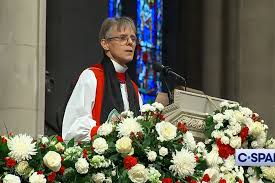
During a prayer service at Washington’s National Cathedral yesterday, the Episcopal bishop of Washington spoke directly to President Trump and Vice President J.D. Vance and made a plea for mercy. Bishop Mariann Edgar Budde did what many politicians, journalists, and other people in power have been unable to do: confront Trump about his inability to recognize the humanity of others. Looking directly at the President and Vice President, Bishop Mariann Budde said, “Let me make one final plea, Mr. President. Millions have put their trust in you. And as you told the nation yesterday, you have felt the providential hand of a loving God. In the name of our God, I ask you to have mercy upon the people in our country who are scared now. There are gay, lesbian and transgender children in Democratic, Republican, and independent families, some who fear for their lives.”
This example of courage came just one day after Trump issued a slate of executive orders. In the final portion of her sermon, Budde challenged these orders and much of the rhetoric surrounding them.
In Lesson Twenty, Dr. Snyder explains that acts of courage do not have to be grand; they can include the small everyday decisions we make, our interactions, and our efforts to speak truth to power (power is relative, so whatever power means to you). Additionally, this lesson recognizes that there are those of us who have more latitude to be courageous; we experience less inherent risk. For example, I am a white cis-het female, middle-class, and a citizen. These intersections of identity mean I can make bolder gestures with fewer potential risks. This is a crucial point in that it means my privilege and dominant identities require that I engage in direct acts of courage more consistently and persistently since those with less privilege are more vulnerable to the weight and violence of our oppressive systems.
But, courage is not on a hierarchy. All acts of courage are courageous.
Standing courageously against power requires strength, conviction, and a deep commitment to the principles of justice, freedom, and humanity. Here are a few ways to be courageous:
1. Speak the Truth
- Tyranny and unchecked power thrive on lies, propaganda, and the suppression of dissent. Speak the truth and counter misinformation with facts and clarity.
2. Defend the Rights of Others
- A courageous stand isn’t just about protecting your own freedoms but also about defending the rights of those who are most vulnerable to oppression.
3. Educate Yourself and Others
- Knowledge is power. Understand the mechanisms of tyranny—how it arises, sustains itself, and can be dismantled. Share this knowledge to inspire resistance and action. “On Tyranny” and “On Freedom” books by Timothy Snyder
4. Resist Fear and Intimidation
- Authoritarians use fear as a weapon to silence opposition. Courage means acting despite fear.
5. Organize and Build Coalitions
- No one does this work alone. Build community and support grassroots movements.
6. Lead by Example
- Courage is contagious. By acting boldly, you inspire others to find their own strength.
7. Remain Hopeful
- Tyranny often seeks to instill hopelessness. Cultivate hope as a form of resistance.
Standing against tyranny and power is a moral imperative, requiring unyielding bravery and the willingness to make sacrifices for the greater good. History shows us that even the most oppressive regimes fall when individuals and communities unite with courage.
Bishop Mariann Edgar Budde courageously delivers plea to Trump