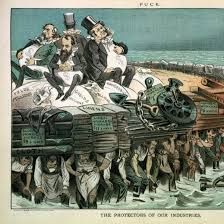
Throughout history, authoritarian and fascist regimes have sought to control and restrict education as a means of maintaining power. By limiting access to knowledge and erasing or rewriting history, these regimes manipulate public perception, suppress dissent, and consolidate their rule. Education and historical memory are potent tools in shaping collective consciousness, and dictatorships recognize that controlling these elements is crucial for sustaining their authority.
Education fosters critical thinking, literacy, and awareness—qualities that threaten authoritarian control. When people are educated, they are more likely to question authority, demand rights, and mobilize against oppression. To prevent this, authoritarian regimes often impose strict control over curricula, ban certain subjects, and censor independent research.
The suppression or distortion of Black history is a longstanding method used to maintain racial hierarchies and prevent societal change. From the deliberate omission of Black contributions in school curricula to the removal of books that discuss systemic racism, these efforts serve to reinforce a status quo that benefits those in power.
In recent years, the erasure of Black history, the vilification of Critical Race Theory (CRT), and the promotion of an “anti-white bias” narrative have been strategically employed to stoke division, consolidate power, and weaken democratic institutions.
The erasure of Black history is not just an academic issue—it has direct consequences on social justice movements. Without an accurate historical foundation, younger generations are less equipped to recognize and challenge systemic inequities, making it easier for authoritarian leaders to manipulate them. One of the most effective ways authoritarian governments sustain power is by controlling historical narratives. By erasing inconvenient truths and constructing glorified versions of the past, these regimes manipulate public perception and national identity.
“To look around the United States today is enough to make prophets and angels weep.
This is not the land of the free;
it is only sporadically the home of the brave.”
― James Baldwin
Critical Race Theory (CRT) is an academic framework that examines how racism is embedded in legal and social systems. Though it has primarily been studied in higher education, it has become a scapegoat in political discourse, with opponents falsely portraying it as an attack on white people.
The demonization of CRT serves several authoritarian purposes:
- Creating a Boogeyman: By misrepresenting CRT as an attempt to make white people feel guilty, fascist-leaning movements shift focus away from discussions on systemic racism and redirect public anger toward educators, scholars, and activists.
- Justifying Censorship: Labeling discussions of systemic racism as “divisive” provides a pretext for banning books, silencing educators, and restricting academic freedom—key strategies in authoritarian control.
- Weakening Civil Rights Protections: By discrediting frameworks that examine racial injustice, regimes can more easily dismantle policies aimed at promoting diversity, equity, and inclusion.
One of the most effective tools of fascist propaganda is the creation of a false victimhood narrative. By framing racial justice efforts as a form of oppression against white people, authoritarian movements cultivate resentment and justify reactionary policies.
“The Great Replacement Theory” is a conspiracy theory that claims that white populations are being deliberately “replaced” by people of color and Jewish people, and it has been used to justify racial violence, anti-Semitism, and nationalist policies. Additionally, attacks on Affirmative Action and DEI Initiatives and the efforts to roll back policies that address racial disparities are often framed as protecting white interests despite evidence that such policies benefit all marginalized communities.
Authoritarian regimes thrive on division. By erasing Black history, demonizing CRT, and fostering an anti-white bias narrative, these regimes undermine solidarity, justify repressive laws, and distract from economic and political failures.
The restriction of education and historical knowledge leads to widespread misinformation, social division, and a populace that is easier to manipulate. When people lack access to accurate history and diverse perspectives, they become more susceptible to propaganda and government control. Furthermore, the suppression of education stifles innovation, progress, and societal growth.
There Is Hope

Despite these oppressive measures, resistance continues. Underground education networks, independent historians, and digital activists work tirelessly to preserve and disseminate suppressed knowledge. Organizations dedicated to free speech and historical accuracy combat censorship efforts and ensure that future generations have access to the truth.
The fight against authoritarian control over education and history is an ongoing battle. Societies committed to democracy and human rights must remain vigilant against any attempts to suppress knowledge. An educated populace is the greatest safeguard against tyranny, and preserving historical truth is essential for preventing the repetition of past atrocities.
1. Think Critically
Ask questions, Be curious, Meet with other people to Talk and Share Ideas, Build Relationships and Community.
2. Find Ways to Share Knowledge
Find Resistance Groups, Participate in Book Clubs, Talk to People
3. Read Non-Fiction
Learn History, Follow Historians on Social Media, Look for Themes and Patterns Between Then and Now.
4. Learn about Capitalism
Check out this Podcast
5. Move into Action, Whatever it is
Education fosters social organization, activism, and political participation.
In sum, restricting education and books helps authoritarian regimes maintain control by keeping citizens uninformed, obedient, and unable to challenge authority.
The battle against historical erasure, racial scapegoating, and restricting education is crucial in resisting authoritarianism. Preserving accurate historical narratives, protecting academic freedom, fostering cross-racial solidarity, and continuing to learn are essential to countering fascist manipulation. History has shown that when people remain informed and united, they can resist oppression and work toward a more just and equitable society.
Examples of US Government Policies Limiting Education and Educational Resources