The Republican Party courted evangelicals as part of a strategic political realignment that began in the late 1960’s and 1970s and continued through the 1980s. This alliance was driven by mutual interests in promoting conservative social values, countering the cultural shifts of the 1960s, and solidifying political power.
The 1960s brought significant social changes, including the civil rights movement, the sexual revolution, and the push for women’s rights, which many evangelicals viewed as threatening traditional values. Issues like abortion, school prayer, the role of religion in public life, and opposition to LGBTQ rights became rallying points for evangelicals who felt their moral values were under siege.
As the Democratic Party increasingly embraced liberal stances on social issues, including support for abortion rights, many evangelicals felt alienated. The Supreme Court’s decision in Roe v. Wade (1973) and other rulings perceived as removing religion from public life (like banning school-sponsored prayer) catalyzed evangelical political activism
The Republican Party’s Southern Strategy aimed to attract disaffected white Southern voters, including evangelicals, who were increasingly unhappy with the Democratic Party’s support for civil rights and progressive social policies. Republican leaders saw an opportunity to build a coalition with the burgeoning religious right, which was organizing to oppose cultural liberalism and secularism.
The rise of evangelical leaders like Jerry Falwell and Pat Robertson and organizations like the Moral Majority and the Christian Coalition mobilized evangelicals to vote based on social issues. Evangelicals were highly organized and motivated to participate in the political process, offering a reliable and influential voting bloc for the Republican Party.
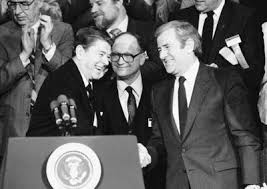
Ronald Reagan’s presidency (1981-1989) solidified the evangelical-Republican alliance. Reagan’s platform included strong opposition to abortion and support for traditional family values, resonating with evangelical voters. Evangelicals played a critical role in Reagan’s electoral victories, demonstrating the political power of this demographic.
The alliance has persisted, with evangelicals continuing to be a key part of the Republican base, influencing the party’s stance on issues like abortion, LGBTQ rights, and religious (Christian) liberty. The Republican focus on appointing conservative judges aligns with evangelical priorities, particularly on overturning Roe v. Wade and other social issues.
The Republican Party courted evangelicals to harness their political energy and moral concerns, offering a mutually beneficial alliance. The party championed key evangelical issues in exchange for political support, shaping the modern conservative agenda around social values, religious (Christian) freedom, and opposition to cultural liberalism. This coalition has been instrumental in the Republican Party’s electoral strategies and policy priorities for decades.