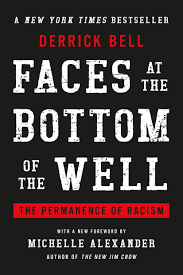
When legal scholar Derrick Bell introduced his theory of interest convergence, he disrupted the idea that racial progress in America is a steady march forward. Bell argued that advances in racial justice only occur when they align with the interests of those in power—specifically white elites. In his seminal 1980 essay, Brown v. Board of Education and the Interest-Convergence Dilemma, Bell contended that the Supreme Court’s decision to desegregate schools had less to do with moral clarity and more to do with global Cold War optics and the strategic interest of projecting democracy abroad. Racial progress, in Bell’s view, is not linear nor permanent—it is conditional.
This theory pairs with Bell’s other foundational claim: the permanence of racism. For Bell, racism is not an aberration in American life—it is a foundational and enduring structure that adapts over time. Rather than imagining racism as a problem we are slowly solving, Bell challenges us to see it as deeply embedded in law, policy, and national identity. These two ideas—interest convergence and the permanence of racism—are particularly urgent when examined through the lens of historical and recent events, from the backlash of Brown v. Board of Education, and the global response to the murder of George Floyd in 2020 to the backlash against Diversity, Equity, and Inclusion efforts unfolding in institutions today.
The Backlash to Brown and the Evolution of Educational Inequality
The Supreme Court’s landmark ruling in Brown v. Board of Education (1954) was a watershed moment in the fight against institutional racism, declaring that segregated schools were “inherently unequal” and violated the Equal Protection Clause of the 14th Amendment. The decision drew upon evidence like the famous Clark doll studies, which revealed the psychological harm segregation inflicted on Black children, including internalized feelings of inferiority. However, Brown not only challenged the legal basis of segregation—it threatened the social and political order of white supremacy. In response, many white communities launched what became known as “Massive Resistance,” a coordinated effort to block desegregation through new laws, school closures, and intimidation. White flight to newly formed private “segregation academies” and suburban districts further entrenched racial separation.
The backlash was not only social but judicial. In Milliken v. Bradley (1974), the Supreme Court ruled that schools were not obligated to desegregate across district lines unless it could be proven that the lines were drawn with discriminatory intent. This decision effectively shielded white suburban districts from integration efforts, allowing de facto segregation to flourish under the guise of neighborhood schooling. As a result, despite the promise of Brown, Black children today are still disproportionately concentrated in underfunded, racially isolated schools. These schools are more likely to have inexperienced teachers, fewer advanced placement courses, outdated materials, and heightened surveillance—conditions that reproduce the very inequalities Brown aimed to dismantle. The evolution of racial inequality in education has thus been sustained not through explicit segregation laws, but through more insidious and bureaucratic mechanisms of exclusion.
Trump’s rise as backlash to the Obama presidency
The rise of Donald Trump can also be understood as a vivid example of racial retrenchment—a direct backlash to the symbolic progress represented by the election of Barack Obama. For many, Obama’s presidency was seen as a triumph of racial progress. But through Derrick Bell’s lens, Obama’s election was never a sign that racism had ended, but rather a temporary alignment of interests: a convergence that allowed for a Black president when it served to restore faith in American democracy during a time of crisis. However, Bell would also argue that the very presence of a Black man in the nation’s highest office provoked deep racial resentment, particularly among those who felt their cultural and economic dominance was slipping. Trump’s campaign capitalized on this grievance—his calls to “Make America Great Again,” his promotion of birtherism, and his appeals to white identity politics were not incidental; they were strategic responses to the anxiety Obama’s presidency evoked. Trump’s ascent was not just political—it was racial backlash wrapped in populist rhetoric, further proof that the forces of white supremacy are deeply embedded and easily reactivated when the illusion of racial equality threatens existing hierarchies.
The George Floyd Moment: Real Reckoning or Converging Interests?
The murder of George Floyd sparked what many called a racial reckoning. Millions took to the streets. Corporations issued anti-racist statements. Books on systemic racism flew off the shelves. Universities and workplaces launched DEI initiatives. For a moment, it appeared as if the United States had reached a moral tipping point. But through Bell’s framework, we must ask: what made that moment possible? And why has the momentum seemingly faded?
Interest convergence suggests that this outpouring of support for racial justice wasn’t simply the result of a sudden collective awakening. Rather, it was driven in part by converging interests—particularly the need for institutions to maintain legitimacy in a time of mass protest, pandemic-induced unrest, and global attention. Supporting Black Lives Matter or launching anti-racist campaigns became a way for companies, schools, and governments to signal responsiveness and maintain profit, especially among younger, more diverse consumers, students, and voters.
But what happens when those interests shift?
The Rollback: From DEI to “Divisive Concepts”
Only a few years later, we are seeing a sweeping backlash. DEI programs are being slashed from universities and corporations. States have passed laws banning discussions of “critical race theory” and “divisive concepts” in classrooms. Books by Black authors, and any books related to racism, patriarchy, climate crisis, transphobia, classism, and on and on are being pulled from shelves. Even major media outlets and pundits have begun to reframe anti-racism as a form of extremism.
This regression echoes Bell’s core argument: that racial progress is not secure, and is always subject to reversal when it no longer aligns with dominant white capitalist interests. As political winds shift, economic fears grow, and white grievance politics gain traction, the temporary convergence that allowed for public displays of allyship in 2020 has dissipated. What remains is a sobering reminder of the fragility of progress that is not rooted in structural transformation.
The rollback also highlights Bell’s belief in the permanence of racism. Racism, in this view, is not just about prejudice—it’s systemic, adaptable, and embedded in the very institutions that claimed to embrace change just a few years ago. DEI efforts that were once praised are now reframed as threats to “neutrality” or “free speech,” demonstrating how easily the language of inclusion can be weaponized against itself. The shifting narrative shows that racism is not overcome by good intentions or public statements—it endures through systems that reassert themselves when threatened.
Derrick Bell did not write to make us comfortable. He wrote to unsettle the myth that America naturally bends toward justice. His work insists that we interrogate the conditions under which racial progress occurs—and recognize how easily it can be undone.
The response to George Floyd’s murder and the swift backlash that followed are not contradictions; they are case studies in interest convergence and the permanence of racism. If we are to build real and lasting racial justice, it must not be contingent on the comfort or convenience of those in power. It must be rooted in shared struggle, structural change, and an honest reckoning with the past and present.
Harvard Law Review: Bell’s Interest Convergence and the Permanence of Racism